

Hyperactive ADHD in Adults: Symptoms and Management
Hyperactive ADHD in adults is defined as a neurodevelopmental condition marked by intense internal restlessness, impulsive behavior, and difficulty staying calm, rather than the overt physical hyperactivity seen in children. The DSM-5 and the American Academy of Family Physicians (AAFP) both recognize this presentation as a distinct clinical pattern requiring at least five persistent symptoms across multiple life settings. Understanding what is hyperactive ADHD in adults matters because the condition is frequently missed, misread as anxiety, or dismissed as a personality trait. Getting clarity on the signs, causes, and treatment options is the first step toward real, lasting support.
What is hyperactive ADHD in adults?
Hyperactive ADHD in adults falls under the broader diagnosis of Attention-Deficit/Hyperactivity Disorder, specifically the hyperactive-impulsive presentation as defined by the DSM-5. The clinical term is ADHD, predominantly hyperactive-impulsive presentation, and it sits alongside the inattentive and combined presentations as one of three recognized subtypes. Adults with this subtype do not typically bounce off walls. Instead, they experience a relentless internal drive that makes stillness feel almost impossible.
The core difference between childhood and adult hyperactivity is where the energy lives. In children, hyperactivity is physical and visible: running, climbing, and constant movement. In adults, hyperactivity shifts inward, presenting as a chronic feeling of being “driven by a motor,” difficulty relaxing during leisure, and a mind that rarely stops running. This shift is why so many adults reach their 30s or 40s before anyone connects the dots.

The AAFP confirms that a valid diagnosis requires symptoms to have started before age 12, even if the person was not formally evaluated until adulthood. That detail matters because many adults look back and recognize the pattern clearly once they know what to look for.
What are the symptoms of hyperactive ADHD in adults?
Adult ADHD symptoms in the hyperactive-impulsive category look different from what most people picture. Physical restlessness is still present, but it competes with a set of internal and behavioral signs that are far more disruptive to daily life.
Common signs of ADHD in adults with the hyperactive-impulsive presentation include:
- Internal restlessness: A persistent sense of being “on” even during rest, making it hard to sit through a movie, a meal, or a quiet evening without feeling agitated.
- Difficulty with quiet activities: Reading, meditating, or simply relaxing feels uncomfortable or nearly impossible without fidgeting, checking a phone, or starting a new task.
- Impulsive speech and actions: Interrupting conversations, finishing other people’s sentences, making purchases without planning, or quitting jobs on impulse.
- Racing thoughts: Mental hyperactivity in the form of multiple simultaneous thoughts running at once, often unrelated to the current task.
- Emotional impulsivity: Reacting quickly and intensely to frustration, criticism, or excitement before thinking through the consequences.
- Difficulty waiting: Impatience in lines, traffic, or conversations that feel slow, often leading to avoidance of situations that require sustained waiting.
These signs differ from inattentive ADHD, which centers on forgetfulness, losing items, and difficulty sustaining focus. Hyperactive-impulsive adults are often highly active mentally and socially, which can mask the disorder entirely.
Pro Tip: If you recognize several of these patterns but have never been evaluated, consider tracking your symptoms across different settings, such as work and home, for two to four weeks before speaking with a clinician. That record becomes useful clinical evidence.
How is hyperactive ADHD diagnosed in adults?
Diagnosis follows specific criteria set by both the DSM-5 and the ICD-11. For adults, a valid diagnosis requires at least five symptoms of hyperactivity or impulsivity that have persisted for more than six months and were present before age 12. The symptoms must also appear in at least two independent settings, such as work and home, to confirm a pervasive impact rather than a situational reaction.
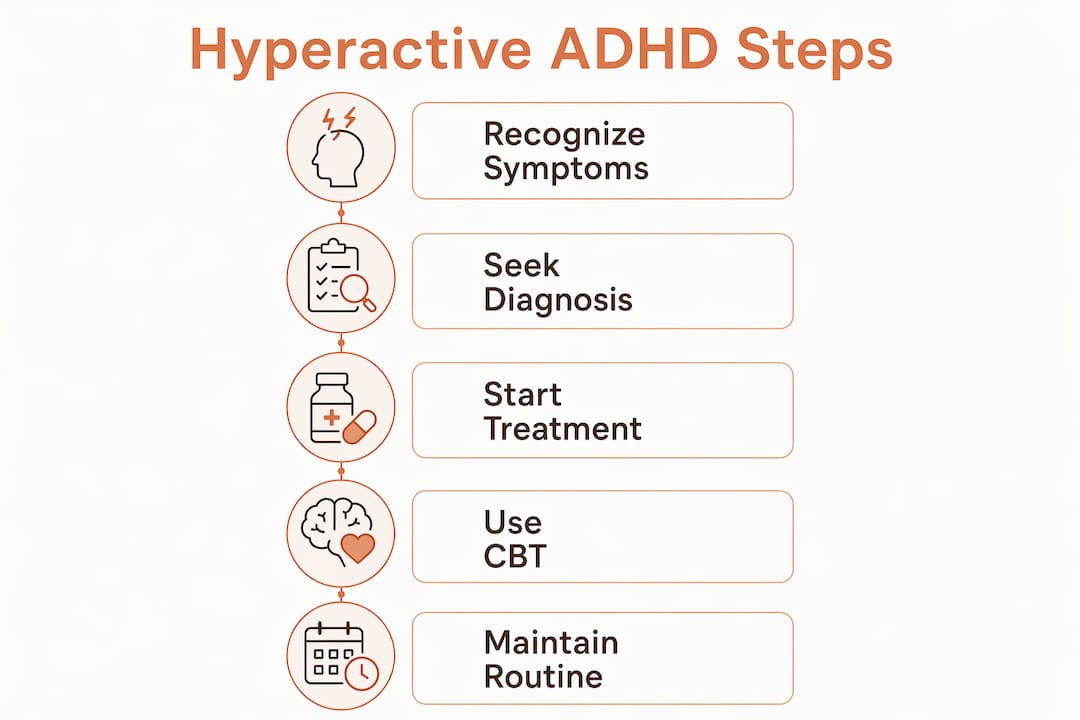
The diagnostic process typically follows these steps:
- Initial screening: Clinicians often use the Adult ADHD Self-Report Scale (ASRS) as a first-pass tool. The ASRS asks about frequency of specific behaviors and flags patterns worth investigating further.
- Comprehensive clinical interview: A psychiatrist or trained clinician reviews developmental history, current functioning, and symptom onset. Self-report alone is not sufficient for diagnosis.
- Collateral information: Reports from a partner, family member, or employer can help confirm that symptoms appear across settings, not just in one context.
- Rule out other conditions: Anxiety, bipolar disorder, and sleep disorders can mimic hyperactive ADHD symptoms. A thorough evaluation rules these out before confirming the diagnosis.
- Comorbidity assessment: Many adults with ADHD carry additional diagnoses. Clinicians check for overlapping conditions like anxiety and depression that can complicate the clinical picture.
One significant diagnostic challenge is that standard screening tools emphasize external, physical hyperactivity signs. Adults who experience mostly internal restlessness and racing thoughts often score below the threshold, leading to under-diagnosis. A skilled clinician knows to probe beyond the checklist.
| Diagnostic requirement | Specifics |
|---|---|
| Minimum symptoms | 5 or more in the hyperactive-impulsive category |
| Duration | Persisting for more than 6 months |
| Age of onset | Symptoms present before age 12 |
| Settings | Present in at least 2 independent settings |
| Comorbidity rate | 39%–59% of adults with ADHD also meet criteria for sluggish cognitive tempo |
The comorbidity with sluggish cognitive tempo is worth noting. Sluggish cognitive tempo involves low energy, slow processing, and daydreaming. When it co-occurs with hyperactive ADHD, the two sets of symptoms can cancel each other out visually, making the person appear neither hyperactive nor inattentive to an outside observer.
What causes hyperactive ADHD symptoms in adults?
Hyperactive ADHD is a neurodevelopmental condition, meaning its roots are biological and present from early in life. The symptoms adults experience today trace back to how their brains developed during childhood, not to stress, poor habits, or weak willpower.
“Dysfunction of dopamine and norepinephrine modulates areas of the brain regulating attention and behavior. These two neurotransmitters are central to why adults with ADHD struggle to regulate impulse, sustain calm, and filter competing stimuli.” — AAFP, FP Essentials, 2025
Dopamine and norepinephrine regulate the brain’s attention networks, reward processing, and executive function. When these systems underperform, the brain seeks stimulation constantly. That seeking behavior is what shows up as restlessness, impulsivity, and the inability to stay still mentally or physically.
Genetics play a strong role. ADHD runs in families at a high rate, and research consistently identifies it as one of the most heritable psychiatric conditions. Environmental factors, including prenatal exposure to toxins, premature birth, and early childhood stress, can amplify genetic risk but do not cause ADHD on their own.
The reason hyperactivity looks different in adults than in children comes down to brain maturation. As the prefrontal cortex develops through adolescence and into early adulthood, it provides more regulatory control over impulse. Adults with ADHD gain some of this control, but the underlying neurological pattern remains. The energy does not disappear. It moves inward, showing up as mental restlessness, emotional reactivity, and a constant need for stimulation that quieter environments cannot satisfy.
How can adults manage and treat hyperactive ADHD?
Effective treatment for hyperactive adults combines medication, therapy, and lifestyle changes. No single approach works for everyone, and the best outcomes come from a plan tailored to the individual’s specific symptom profile and life circumstances.
The most effective treatment options include:
- Stimulant medications: Amphetamine-based and methylphenidate-based stimulants are the first-line pharmacological treatment. They increase dopamine and norepinephrine availability, directly addressing the neurochemical deficit driving symptoms.
- Non-stimulant medications: Atomoxetine and certain antidepressants offer alternatives for adults who do not respond well to stimulants or have contraindications.
- Cognitive behavioral therapy (CBT): CBT combined with stimulant medication is the most effective treatment approach for adult ADHD. CBT builds practical skills for managing impulsivity, organizing tasks, and regulating emotional reactions.
- Lifestyle interventions: Regular aerobic exercise increases dopamine naturally. Structured daily routines reduce the cognitive load of deciding what to do next. Time-blocking and external reminders compensate for weak working memory.
- Support networks: Peer groups, ADHD coaches, and informed family members provide accountability and reduce the isolation that often accompanies a late diagnosis.
Living with ADHD as an adult is more manageable when treatment is consistent and personalized. A structured ADHD treatment plan addresses both the neurological and behavioral dimensions of the condition, rather than relying on medication alone.
Pro Tip: Ask your clinician specifically about the hyperactive-impulsive subtype when seeking evaluation. Many adults are assessed primarily for inattentive symptoms, and the hyperactive presentation can be overlooked if the clinician does not probe for internal restlessness and impulsivity directly.
Adults who pursue ADHD treatment consistently report improvements in work performance, relationship quality, and overall wellbeing. The goal is not to eliminate personality but to reduce the friction that unmanaged symptoms create every day.
Key Takeaways
Hyperactive ADHD in adults is defined by internal restlessness, impulsivity, and racing thoughts, and it responds best to a combination of stimulant medication and cognitive behavioral therapy.
| Point | Details |
|---|---|
| Adult hyperactivity is internal | Adults rarely show physical hyperactivity; restlessness and racing thoughts are the primary signs. |
| Diagnosis requires five symptoms | DSM-5 requires at least five hyperactive-impulsive symptoms persisting over six months, present before age 12. |
| Two settings required | Symptoms must appear in at least two independent settings, such as work and home, for a valid diagnosis. |
| CBT plus medication works best | Combining cognitive behavioral therapy with stimulant medication produces the strongest treatment outcomes. |
| Screening tools can miss adults | Standard tools focus on physical hyperactivity, so adults with internal symptoms are frequently under-diagnosed. |
What I’ve learned about adult hyperactive ADHD that most articles miss
Adults with hyperactive ADHD are often the last people anyone suspects. They hold jobs, maintain relationships, and appear functional. What no one sees is the exhausting internal effort required to appear that way.
The biggest misconception I encounter is that hyperactivity in adults means visible, physical restlessness. It rarely does. The person who cannot stop mentally rehearsing conversations, who starts five projects before finishing one, who feels physically calm but mentally chaotic: that is hyperactive ADHD in adults. Standard screening tools often miss this entirely because they were designed around childhood behavior.
What concerns me most is how many adults receive an anxiety diagnosis when the real driver is hyperactive ADHD. The overlap between ADHD and anxiety is real, but treating anxiety alone when ADHD is the root cause produces limited results. Getting the right diagnosis changes everything.
My advice to anyone supporting a loved one with this condition: stop looking for the child who could not sit still. Start listening for the adult who cannot quiet their mind.
— Jamie
Journeymhw offers personalized ADHD care from home
Adults who recognize hyperactive ADHD symptoms in themselves often face a long wait for evaluation and an unclear path to treatment. Journeymhw removes both barriers.
Journeymhw is a telehealth platform serving adults in Texas and Colorado with virtual psychiatric evaluations, medication management, and structured care plans for ADHD, anxiety, and depression. The process is straightforward: book an appointment online, complete an evaluation with a licensed clinician, and receive a personalized treatment plan that fits your life. For adults with hyperactive ADHD, that plan typically combines medication and behavioral support tailored to your specific symptom profile. Explore adult ADHD treatment at Journeymhw and take the first step toward feeling like yourself again.
FAQ
What is the difference between hyperactive and inattentive ADHD in adults?
Hyperactive-impulsive ADHD centers on internal restlessness, impulsivity, and racing thoughts, while inattentive ADHD centers on forgetfulness, difficulty focusing, and losing track of tasks. Adults can also have a combined presentation that includes both sets of symptoms.
Can adults be diagnosed with hyperactive ADHD for the first time?
Yes. The DSM-5 requires that symptoms began before age 12, but many adults are not formally evaluated until much later in life. A late diagnosis is valid as long as the clinician confirms early-onset symptoms through history.
Why do standard ADHD screening tools miss adults with hyperactive symptoms?
Most screening tools were built around physical hyperactivity signs observed in children. Adults with primarily internal hyperactivity and racing thoughts often score below the diagnostic threshold, leading to under-diagnosis.
What is the most effective treatment for hyperactive ADHD in adults?
CBT combined with stimulant medication is the most effective approach, according to the AAFP. Non-stimulant medications are available for adults who cannot tolerate stimulants or have specific comorbidities.
How does hyperactive ADHD affect daily life for adults?
Hyperactive ADHD creates friction in relationships, work performance, and emotional regulation. Adults often struggle with impulsive decisions, difficulty completing tasks, and a persistent sense of restlessness that makes relaxation feel unproductive or impossible.
Recommended
- ADHD Burnout Symptoms: What Adults Need to Know – Journey Mental Health
- ADHD Overwhelm in Adults: Strategies That Actually Work – Journey Mental Health
- Why ADHD treatment improves daily function in adults – Journey Mental Health
- ADHD Emotional Dysregulation: What Adults Need to Know – Journey Mental Health