

Anxiety and Depression Link Explained for Adults
Anxiety and depression are two distinct but deeply connected mental health conditions that frequently occur together, with up to 60% of individuals with an anxiety disorder also experiencing depression symptoms. The anxiety and depression link explained in clinical literature is not coincidental. These conditions share overlapping biology, genetics, and stress pathways that cause each to amplify the other. Understanding how they connect gives you a clearer picture of your symptoms and opens the door to more targeted, effective care.
What are the shared symptoms of anxiety and depression?
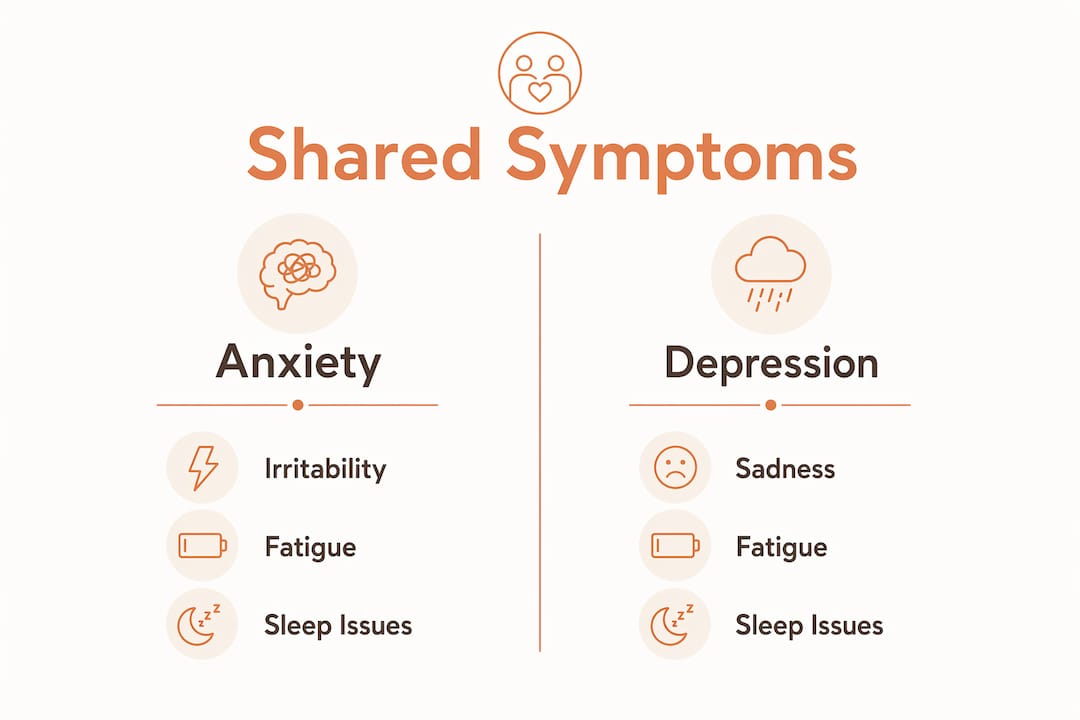
Anxiety and depression co-occur and share symptoms including irritability, fatigue, sleep disruption, and difficulty concentrating. This overlap is one reason the two conditions are so often misidentified or treated as a single problem when they are actually distinct diagnoses requiring differentiated assessment. Recognizing where they diverge is just as important as recognizing where they converge.
The table below compares the core features of each condition:
| Symptom area | Anxiety | Depression |
|---|---|---|
| Mood | Persistent worry, fear, dread | Persistent sadness, emptiness, hopelessness |
| Energy | Restlessness, tension | Fatigue, low motivation, slowed thinking |
| Sleep | Difficulty falling asleep, racing thoughts | Sleeping too much or too little |
| Concentration | Distracted by worry | Difficulty focusing, memory problems |
| Physical | Rapid heartbeat, sweating, muscle tension | Aches, appetite changes, weight shifts |
The symptom overlap between these conditions creates real diagnostic challenges. A person who feels exhausted, can’t sleep, and struggles to concentrate could be experiencing anxiety, depression, or both simultaneously. This is why professional evaluation matters. Self-diagnosis based on a symptom checklist alone frequently misses the full picture, and diagnostic confusion is one of the most common barriers to getting the right treatment.
You can also explore how these symptoms compare to other conditions in this overview of overlapping symptoms across ADHD, anxiety, and depression.
What biological mechanisms connect anxiety and depression?
Anxiety and depression share neurotransmitter imbalances, genetic predispositions, and stress response pathways that explain why the two conditions so often appear together. The brain systems regulating mood, fear, and reward overlap significantly, meaning a disruption in one area tends to affect the other.

| Mechanism | Role in anxiety | Role in depression |
|---|---|---|
| Serotonin | Regulates fear and worry responses | Regulates mood and emotional stability |
| Dopamine | Modulates threat perception | Controls motivation and reward processing |
| HPA axis | Activates stress response (cortisol release) | Chronic activation leads to mood dysregulation |
| Genetics | 40% heritability in anxiety disorders | Shared genetic risk factors with anxiety |
The HPA (hypothalamic-pituitary-adrenal) axis deserves particular attention. When you experience prolonged stress or trauma, the HPA axis releases cortisol repeatedly. Over time, this chronic activation disrupts serotonin and dopamine signaling, creating conditions where both anxiety and depression can take hold. This is why traumatic life events, chronic illness, or sustained work stress so frequently trigger both conditions at the same time rather than one in isolation.
Genetic overlap adds another layer. Anxiety disorders carry a 40% heritability rate, and the genes involved in that risk substantially overlap with those linked to major depressive disorder. This shared genetic architecture means that if you have a family history of either condition, your risk for both is elevated.
Can anxiety lead to depression over time?
Anxiety disorders frequently precede depression, and treating anxiety early can reduce later depression risk. This is one of the most clinically significant findings in the relationship between the two conditions. It means anxiety is not just a co-occurring problem. In many cases, it is the starting point of a trajectory that leads to depression if left unaddressed.
The evidence on timing is striking:
- About 65% of cases show anxiety disorders preceding major depressive disorder by at least two years.
- Chronic anxiety depletes emotional and cognitive resources, making a person more vulnerable to depressive episodes.
- Avoidance behaviors driven by anxiety, such as withdrawing from social activities or work, directly reduce the positive experiences that protect against depression.
- Sleep disruption caused by anxiety compounds over time, and poor sleep is one of the strongest independent risk factors for developing depression.
The mechanism here is cumulative. Anxiety does not cause depression in a single event. It erodes resilience gradually, narrowing the range of activities and relationships that provide emotional support. By the time depression sets in, the person has often been managing untreated anxiety for months or years.
Pro Tip: If you are currently managing anxiety symptoms, tracking your mood separately from your anxiety levels gives your provider critical information. A simple daily rating of both on a 1 to 10 scale can reveal patterns that inform whether depression is developing alongside your anxiety.
What is anxious depressive attack and why does it matter?
Anxious depressive attack, or ADA, is defined as a sudden episode of intense anxiety immediately followed by intrusive depressive thoughts, representing a transdiagnostic phenomenon where anxiety and depression merge into a single clinical event. A 2026 Springer Nature study found ADA prevalence at 21.68% in anxiety specialty clinics, making it far more common than most clinicians previously recognized.
ADA matters because it challenges the conventional model of treating anxiety and depression as two separate, sequential problems. When a person experiences ADA, the boundary between the two conditions collapses within a single episode. The anxiety does not resolve before the depressive cognitions begin. They overlap and reinforce each other in real time.
“ADA exemplifies a subtype where anxiety and depressive symptoms co-occur closely, challenging conventional diagnostic categories and calling for transdiagnostic treatment frameworks.” — BioPsychoSocial Medicine, 2026
The clinical implication is direct. If your provider is treating only your anxiety or only your depression without assessing whether you experience episodes where both occur simultaneously, your treatment plan may be incomplete. ADA also correlates with greater clinical complexity and higher rates of comorbid conditions, which means it typically requires more personalized care than either condition alone. Understanding ADA is a concrete example of why the connection between anxiety and depression cannot be reduced to a simple checklist.
What treatments work for co-occurring anxiety and depression?
The most effective treatment for co-occurring anxiety and depression addresses both conditions simultaneously rather than treating one and hoping the other resolves. Cognitive behavioral therapy (CBT) and interpersonal therapy (IPT) both carry strong evidence for reducing symptoms of anxiety and depression within the same treatment course. CBT in particular targets the thought patterns and avoidance behaviors that sustain both conditions.
On the medication side, selective serotonin reuptake inhibitors (SSRIs) such as sertraline and escitalopram are first-line options for both conditions, which is one practical advantage of their shared neurobiology. Your provider may also consider serotonin-norepinephrine reuptake inhibitors (SNRIs) depending on your symptom profile.
A 2026 randomized controlled trial using transcranial magnetic stimulation (TMS) found that targeting distinct brain circuits produced meaningfully different outcomes. The anxiosomatic circuit target improved anxiety scores (BAI) by 58% compared to 36% for the dysphoric circuit target. This finding confirms that anxiety and depression, even when they co-occur, respond differently to treatment depending on which neural pathway is addressed.
The practical takeaway from that research is clear. Monitoring anxiety and depression separately using distinct symptom scales gives your provider the data needed to adjust your treatment as it progresses. A single combined score obscures which condition is improving and which is not.
Key principles for managing both conditions together:
- Use validated scales for each condition separately, such as the GAD-7 for anxiety and the PHQ-9 for depression.
- Communicate changes in both symptom clusters to your provider at every appointment.
- Prioritize sleep as a treatment target, since it affects both conditions independently.
- Consider whether your anxiety symptoms preceded your depression, as this timeline informs which condition to address first.
Pro Tip: Before your next appointment, write down the three anxiety symptoms and three depression symptoms that bother you most. Bringing this list gives your provider a faster, more accurate starting point for personalizing your care.
Key takeaways
Anxiety and depression share biology, genetics, and stress pathways that cause them to co-occur in the majority of complex presentations, making integrated assessment and treatment the most effective approach.
| Point | Details |
|---|---|
| High comorbidity rate | Up to 60% of people with anxiety also experience depression symptoms. |
| Anxiety often comes first | In about 65% of cases, anxiety precedes major depression by at least two years. |
| Shared biological roots | Serotonin, dopamine, HPA axis, and genetic overlap explain why both conditions develop together. |
| ADA is a real clinical entity | Anxious depressive attack affects 21.68% of anxiety clinic patients and requires transdiagnostic care. |
| Separate symptom tracking matters | Monitoring anxiety and depression with distinct scales leads to better-targeted treatment outcomes. |
Why integrated care changes everything
I have reviewed hundreds of cases where someone spent years being treated for depression alone, only to discover that untreated anxiety was driving the entire clinical picture. The depression was real. But it was downstream of anxiety that had never been properly assessed or addressed.
What strikes me most is how often the timeline gets ignored. Clinicians ask what you are feeling right now, but rarely ask what you were feeling two or three years ago. That history is where the anxiety-depression relationship becomes visible. When anxiety comes first and depression follows, treating only the depression is like addressing a symptom while leaving the cause intact.
I also think the field has been slow to adopt transdiagnostic thinking in everyday practice. The 2026 ADA research and the TMS circuit-targeting trial both point in the same direction. Anxiety and depression are not always two separate problems sitting side by side. Sometimes they are one complex presentation that requires a treatment framework built for both. Waiting for a clean, single diagnosis before starting care costs people months or years of unnecessary suffering.
My honest recommendation: if you feel like your treatment is only partially working, ask your provider whether both conditions are being tracked and addressed. That question alone can shift the entire direction of your care.
— Jamie
How Journeymhw supports anxiety and depression care
If you recognize yourself in this article, you do not have to figure out the next step alone. Journeymhw is a telehealth platform serving adults in Texas and Colorado, offering virtual psychiatric evaluations and personalized treatment plans for anxiety, depression, and co-occurring conditions.
Our providers assess both anxiety and depression symptoms as part of every evaluation, using structured approaches that account for the clinical overlap described here. Whether you need anxiety treatment or are looking for targeted depression care, we build your plan around your specific symptom profile. Appointments are available quickly, and the entire process happens from home. If you are ready to take a step toward feeling better, we are ready to support you.
FAQ
What is the connection between anxiety and depression?
Anxiety and depression share overlapping neurobiology, genetics, and stress pathways, causing them to co-occur in a large proportion of cases. Up to 60% of people with an anxiety disorder also experience depression symptoms at some point.
Can anxiety cause depression to develop?
Yes. In approximately 65% of cases, anxiety disorders precede major depressive disorder by at least two years. Chronic anxiety depletes emotional resilience and drives avoidance behaviors that directly increase depression risk.
What are the symptoms shared by anxiety and depression?
Both conditions cause fatigue, sleep disruption, irritability, and difficulty concentrating. The key difference is that anxiety centers on fear and worry while depression centers on persistent sadness, hopelessness, and low motivation.
What is the best treatment for co-occurring anxiety and depression?
Cognitive behavioral therapy (CBT) and SSRIs such as sertraline are first-line treatments that address both conditions. Tracking anxiety and depression symptoms separately with tools like the GAD-7 and PHQ-9 allows providers to personalize and adjust care more precisely.
How do I know if I have anxiety, depression, or both?
Symptom overlap makes self-diagnosis unreliable. A structured evaluation by a licensed psychiatric provider, using validated symptom scales for each condition, is the most accurate way to identify what you are experiencing and build a treatment plan that fits.