

Why Untreated Depression Worsens: Risks You Should Know
Untreated depression does not plateau. Without care, symptoms intensify, brain structure changes, and physical health deteriorates in ways that become harder to reverse the longer treatment is delayed. Research confirms this progression is dose-dependent: every month without treatment adds measurable risk. Here is what that means for you, and why acting early makes a real difference.
- Depression symptoms grow more severe and more resistant to treatment over time
- Brain regions controlling memory, emotion, and decision-making shrink with prolonged illness
- Each additional month without treatment raises suicide risk by 5%, thyroid hormone abnormalities by 8%, and elevated blood pressure by 5%
- Cognitive impairments, including memory loss and concentration difficulties, accumulate and may persist
- Substance use disorders and other mental health conditions become more likely as depression goes unaddressed
- Early intervention can reverse many of these changes, thanks to the brain’s neuroplasticity
Why untreated depression worsens: psychological and functional decline
Depression left without treatment does not simply stay the same. Emotionally, sadness deepens into persistent hopelessness, and irritability can replace what once felt like manageable low moods. Mood instability increases, making it harder to regulate reactions to everyday stress.
Cognitive function takes a significant hit as well. Concentration difficulties, memory lapses, and slowed decision-making are among the most disabling effects of untreated major depressive disorder (MDD). These are not just feelings of being “off.” They reflect real disruptions in how the brain processes and stores information, and they tend to worsen the longer depression goes unaddressed. People living with high-functioning depression often push through these symptoms without recognizing them as clinical.
Behaviorally, withdrawal from friends, family, and work becomes a pattern. Productivity drops. Relationships strain under the weight of emotional unavailability. Over time, the collapse of social support systems can itself deepen depression, creating a cycle that is increasingly difficult to break.
Sleep and appetite changes compound the problem. Insomnia or hypersomnia disrupts recovery, while appetite shifts affect energy and physical health. These changes are not side effects of depression. They are core symptoms that worsen without treatment.
- Emotional: deepening hopelessness, mood instability, increased irritability
- Cognitive: poor concentration, memory loss, impaired decision-making
- Behavioral: social withdrawal, reduced productivity, relationship breakdown
- Physical: disrupted sleep, appetite changes, fatigue
- Comorbid risk: higher likelihood of developing substance use disorders or anxiety disorders alongside depression
How depression damages the brain when left untreated
The brain changes that accompany untreated depression are not abstract. Neuroimaging studies show measurable gray matter loss in regions that govern emotion, memory, and executive function, and this loss correlates directly with how long depression has gone without treatment.

Neuropsychologist Dr. Hayley B. Kristinsson, PsyD, of UCI Health Memory Disorder Services, puts it plainly:
The hippocampus, which plays a central role in memory formation, is among the first regions affected. Studies using MRI show that gray matter volume loss originates in the hippocampus and ventral medial prefrontal cortex, then spreads to other regions as illness duration increases. The thalamus and amygdala follow. This is not a static picture. It is a progressive one.
The biological mechanism driving this is called neuroprogression. It involves three overlapping pathways: chronic inflammation, oxidative stress, and dysfunction of the HPA (hypothalamic-pituitary-adrenal) axis. Together, these processes weaken brain resilience with each untreated episode, impairing the brain’s ability to form new connections and recover from stress.
Neuroprogression creates a vicious cycle: repeated or prolonged depressive episodes amplify inflammation and HPA axis dysfunction, progressively worsening both the illness and the brain’s response to future treatment.
Pro Tip: Brain fog, forgetfulness, and difficulty concentrating are often mistaken for stress or poor sleep. If these symptoms persist for more than two weeks alongside low mood, they may reflect depression’s direct effect on neural communication, not just fatigue.
The “scar effect” describes the cumulative result of this process. Each untreated episode leaves behind structural changes, particularly hippocampal volume reduction, that make future recovery harder. This is why the first episode of depression is the most important one to treat promptly.
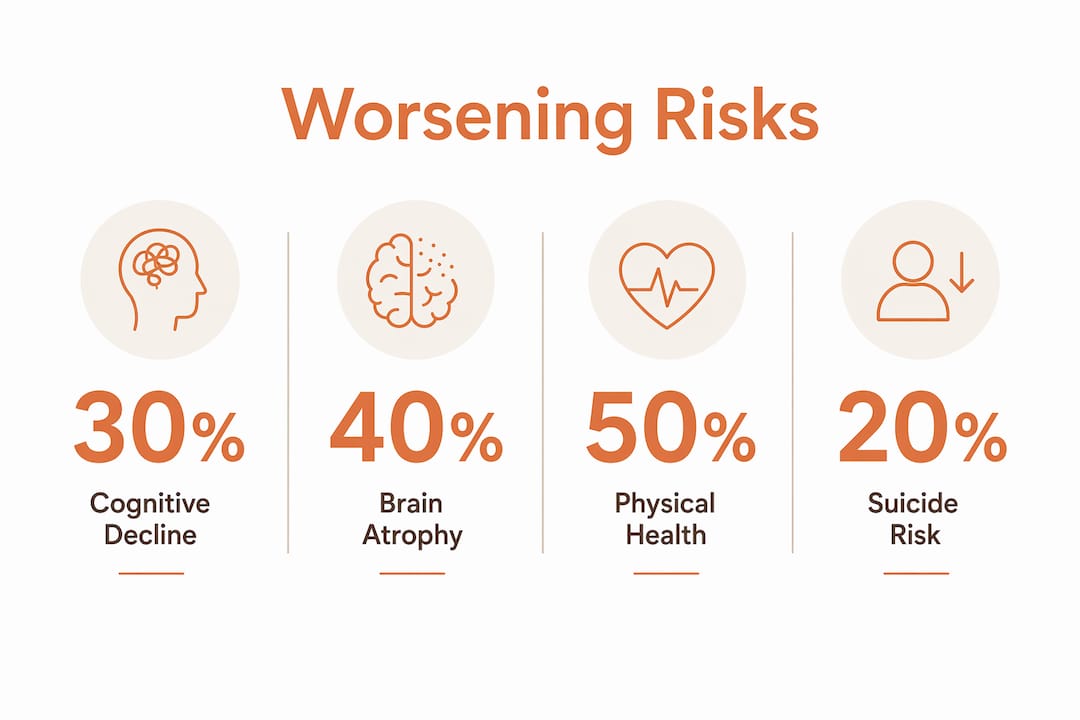
Physical health risks and suicide linked to untreated depression
The consequences of ignoring depression extend well beyond mood. A large-scale cross-sectional study of 1,289 early adult patients found that those who went untreated for eight months or more had significantly higher odds of suicide attempts (OR: 1.77), elevated thyroid-stimulating hormone levels (OR: 2.73), and high-normal blood pressure (OR: 1.98) compared to those who began treatment within three months.
Key finding: Each additional month without treatment raises the odds of a suicide attempt by 5%, thyroid hormone abnormalities by 8%, and high-normal blood pressure by 5%.
These are not small increments. Over six months, the cumulative risk becomes clinically meaningful. Elevated thyroid-stimulating hormone (TSH) levels signal systemic endocrine disruption, and high-normal blood pressure places additional strain on cardiovascular health. Depression is not only a mental illness. It is a systemic condition with measurable physical consequences.
Immune function also suffers. Chronic depression elevates proinflammatory cytokines, including IL-1, IL-6, and TNF-alpha, which contribute to inflammation throughout the body. This inflammatory burden increases overall mortality risk and accelerates biological aging at the cellular level.
Suicide risk deserves direct attention. The data above show that delay is not neutral. Waiting does not give depression time to resolve on its own. For most people, the natural course of an untreated episode does not lead to self-recovery after the first three months have passed.
Why early treatment matters and what to do if symptoms are worsening
The encouraging reality is that the brain can recover. When depression is treated effectively, many cognitive and structural changes reverse, thanks to neuroplasticity. Dr. Kristinsson notes that “when depression is treated effectively, many people experience a resolution of the cognitive changes, suggesting that these changes may not be permanent.” Treatment does not just relieve symptoms. It can restore brain function.
A meta-analysis of unipolar depression outcomes found that shorter duration of untreated illness significantly improves treatment response (relative risk: 1.70) and remission rates (relative risk: 1.65). Longer delays correlate with chronicity and poorer recovery. The window for the best outcomes is early.
If your symptoms are worsening, here are concrete steps to take:
- Seek a professional evaluation. A psychiatric evaluation is the starting point. Online platforms make this accessible without requiring time off work or travel.
- Understand your options. Treatment for depression typically includes medication, therapy, or a combination. Both are evidence-based and often most effective together.
- Address stigma directly. Attitudinal barriers, including stigma, poor symptom awareness, and fear of medications, delay treatment more than structural or financial barriers for most people. Recognizing this is the first step to moving past it. Resources on breaking barriers to mental health support can help you reframe what seeking care actually means.
- Don’t wait for a crisis. The research is clear: outcomes are better when treatment starts early, not after months of worsening.
- Track your symptoms. Noting changes in sleep, mood, energy, and concentration helps your provider make a faster, more accurate assessment.
Pro Tip: If you’re unsure whether what you’re experiencing is depression, an online psychiatric evaluation through a telehealth platform like Journeymhw can give you clarity quickly, without a long wait for an in-person appointment.
Journeymhw offers depression treatment through structured virtual care pathways, with appointments available in Texas and Colorado. Getting evaluated is the single most important step you can take.
What research tells us about treatment delays and long-term outcomes
The clinical evidence on treatment delay is consistent and sobering. A longitudinal study tracking patients over two years found that untreated duration was the single strongest predictor of depression severity at follow-up, outperforming even baseline symptom severity. This held true even for patients who had discontinued medication for nearly 18 months before the follow-up assessment.
A 2025 narrative review reinforced this picture, finding that longer duration of untreated illness associates with greater symptom severity, reduced treatment response, increased chronicity, cognitive impairment, and higher rates of suicidal behavior. Stigma and low mental health literacy emerged as the leading contributors to delay, often more influential than cost or access. Understanding therapy stigma and its real-world impact is part of closing that gap.
| Untreated duration | Key outcome data |
|---|---|
| Each additional month | increased suicide risk, elevated TSH, and high-normal blood pressure |
| — | Best remission and treatment response rates (RR: 1.65–1.70 advantage) |
| 8 months or more | OR 1.77 for suicide attempts, OR 2.73 for elevated TSH, OR 1.98 for high-normal blood pressure |
| 2-year follow-up | Untreated duration predicts severity more strongly than baseline symptom scores |
The scar effect and neuroplasticity findings together tell a coherent story. Untreated depression causes cumulative brain changes that impair future recovery. But treatment, started early, can interrupt that process. The brain retains the capacity to heal. What it cannot do is heal on its own when depression is active and unaddressed.
“Early intervention might disrupt the vicious cycle of depression,” note researchers from the two-year longitudinal study, adding that this benefit persisted even after patients had stopped pharmacotherapy.
The takeaway from the research is not that delayed treatment makes recovery impossible. It is that every month of delay narrows the window for the best outcomes and adds measurable biological and psychological cost.
If you’re ready to take the next step, Journeymhw makes it straightforward to get evaluated and start care from home. 
Book a virtual evaluation with Journeymhw today and get the structured, personalized psychiatric care you deserve.
Key Takeaways
Untreated depression worsens in a dose-dependent pattern, with each month of delay adding measurable risk to brain structure, physical health, and suicide likelihood, while early treatment can reverse many of these changes through neuroplasticity.
| Point | Details |
|---|---|
| Delay increases risk monthly | Each month without treatment raises suicide risk by 5% and thyroid abnormalities by 8%. |
| Brain atrophy is progressive | Hippocampal and prefrontal cortex shrinkage correlates directly with untreated illness duration. |
| Early treatment improves outcomes | Shorter untreated duration improves treatment response (RR: 1.70) and remission (RR: 1.65). |
| Stigma is the leading barrier | Attitudinal barriers like stigma and medication fear delay treatment more than cost or access. |
| Neuroplasticity enables recovery | Effective, timely treatment can reverse many cognitive and structural brain changes. |
Recommended
- Why Depression Treatment Sometimes Doesn’t Work Phase 2 – Journey Mental Health
- High Functioning Depression: 10 Strategies That Help – Journey Mental Health
- Online Depression Treatment: What to Expect Phase 3 – Journey Mental Health
- Anxiety and Depression Link Explained for Adults – Journey Mental Health