

Combining SSRIs and Stimulants: Safety for ADHD Adults
Combining an SSRI with a stimulant is generally safe for most adults with ADHD and a co-occurring mood or anxiety disorder, provided a prescriber initiates the combination deliberately and monitors you afterward. That verdict comes with real conditions attached. It depends on which SSRI and which stimulant you’re pairing, your cardiovascular history, and whether you have close follow-up in the first few weeks.
A large retrospective cohort study published in JAMA Network Open followed 17,234 adults with ADHD and found no increase in overall adverse events when methylphenidate was combined with an SSRI, compared with methylphenidate alone. The bigger risk isn’t the combination itself. It’s skipping the safety net: serotonin syndrome, CYP2D6-related drug buildup, and cardiovascular strain are all manageable when someone is watching for them.
Here’s what needs to happen for this pairing to work well:
- Your prescriber knows your full medication and supplement list, including anything you take occasionally.
- You start one medication at a time when possible, so side effects are easier to trace to their source.
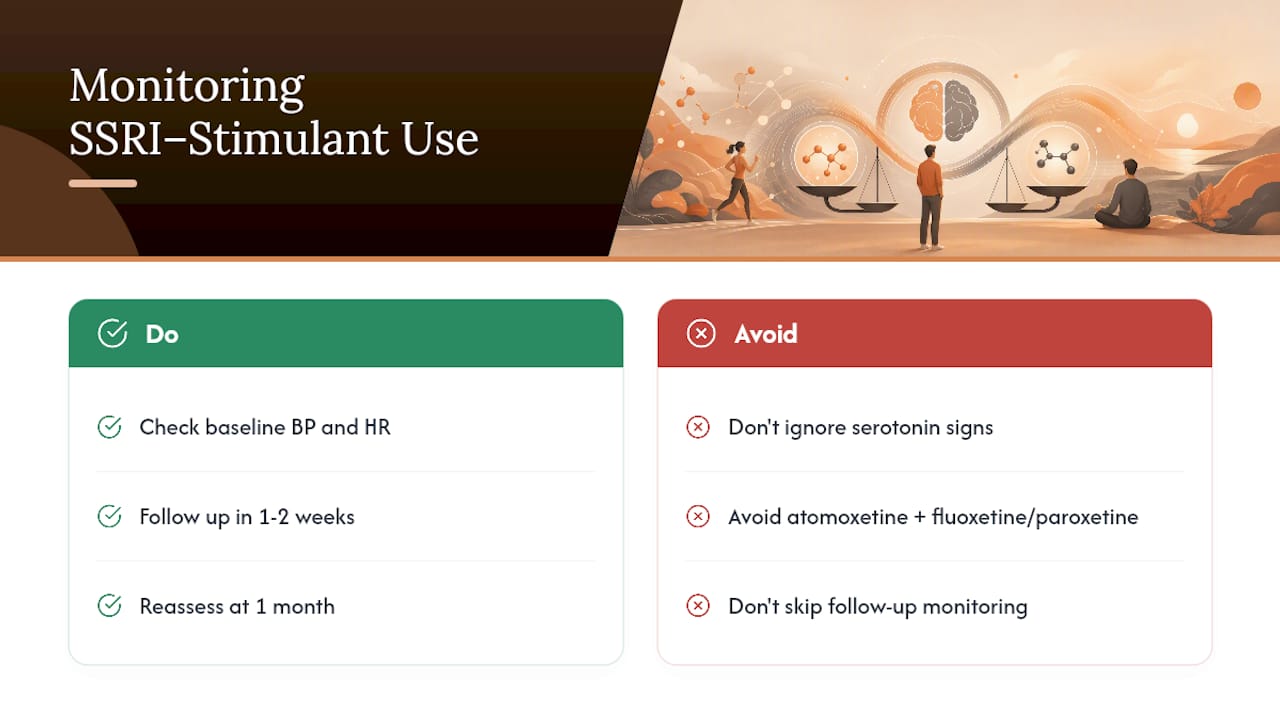
- You have a follow-up scheduled within the first one to two weeks of adding the second medication.
- You know the warning signs of serotonin syndrome (agitation, high fever, muscle rigidity, rapid heart rate) and would go to urgent care if they appeared.
Never stop either medication abruptly without talking to your prescriber first. Abrupt discontinuation carries its own risks, and a rushed decision made out of fear is rarely the safest one. If you develop the symptoms listed above, that’s the one scenario where you act immediately and sort out the medication questions afterward.
Key Takeaways
Combining an SSRI with a stimulant is safe for most adults with ADHD and a mood disorder when a prescriber staggers the start and monitors vitals and mood in the first month.
| Point | Details |
|---|---|
| Large cohort supports safety | A 17,234-person study found no increase in adverse events with methylphenidate plus an SSRI, and a lower headache risk. |
| Watch for serotonin syndrome | Agitation, fever, muscle rigidity, and rapid heart rate within hours of a dose change require same-day medical attention. |
| CYP2D6 drives some risk | Fluoxetine and paroxetine inhibit CYP2D6 more strongly than sertraline or escitalopram, raising stimulant or atomoxetine levels. |
| Staggered starts reduce risk | Starting one medication, confirming tolerance, then adding the second at a lower dose is the standard clinical approach. |
| Journeymhw supports monitored combination therapy | Virtual ADHD treatment and medication management in Texas and Colorado build in the follow-up this combination needs. |
Table of Contents
- What the Research Says About Combining SSRIs and Stimulants
- Why SSRIs and Stimulants Can Interact in the Body
- Guidance for Specific SSRI and Stimulant Pairings
- What to Watch for: A Monitoring Checklist
- How Clinicians Typically Titrate Combined Treatment
- When Not to Combine These Medications
- What to Tell Your Prescriber Before You Start
- Daily Habits That Make Combination Therapy Safer
- What We Still Don’t Know
- A Clinical Perspective on Combining These Medications
- Get Supervised Care for Your Medication Combination
- Frequently Asked Questions
- Sources
What the Research Says About Combining SSRIs and Stimulants
The evidence base for combining SSRIs and stimulants is smaller than you’d expect for such a common prescribing pattern, but what exists is reassuring for most patients.
- The JAMA Network Open cohort found methylphenidate plus an SSRI carried no higher rate of adverse events than methylphenidate alone, and the combination group actually had a lower risk of headache, with a hazard ratio indicating about half the risk.
- Smaller randomized trials and older observational reports flag occasional issues like palpitations, tremor, and headache when stimulants and antidepressants are combined, though these studies tend to run short and enroll far fewer people.
- Case reports referenced in interaction databases describe rare instances of hallucinations, confusion, seizures, and serotonin syndrome when methylphenidate raised SSRI plasma levels, according to Drugs. These are isolated, not representative, but they explain why monitoring guidance exists at all.
The JAMA Network Open finding matters because it’s the largest, most recent dataset available. It’s a retrospective cohort, not a randomized trial, so it can’t prove cause and effect the way a controlled study would. But at that sample size, an observational signal this consistent carries real weight, especially since it lines up with decades of routine clinical practice already treating this combination as standard care for ADHD with comorbid depression or anxiety.
The study also ran sensitivity analyses comparing fluoxetine against escitalopram and found some differences in associated hypertension and hyperlipidemia rates between the two SSRIs, a reminder that “SSRI” isn’t a single interchangeable category when you’re evaluating cardiovascular risk.
What the evidence doesn’t cover well: long-term outcomes past a few years, pediatric-specific safety data, and head-to-head comparisons across every stimulant-SSRI pairing. Clinical reviews on PubMed consistently recommend monitoring when combining stimulants and antidepressants, which tells you this is common practice, not an experimental approach, even where the randomized-trial data is thin.
The clinical takeaway: for most adults without cardiac disease or a history of serotonin syndrome, the data supports combination therapy as a reasonable, well-tolerated option when a prescriber is actively monitoring you. It is not a green light to combine medications informally or adjust doses on your own.
Why SSRIs and Stimulants Can Interact in the Body
Two separate mechanisms explain why this combination needs oversight: one is about brain chemistry, the other is about how your liver processes the drugs.
Pharmacodynamic interaction happens when two drugs push on the same biological system from different directions. SSRIs increase serotonin availability. Some stimulants, particularly at higher doses, also affect serotonin release. Stack enough serotonergic activity together and you raise the risk of serotonin syndrome, a cluster of symptoms driven by excess serotonin signaling in the central nervous system.
Serotonin syndrome typically shows up within hours to a day of a dose change, not weeks later. Watch for:
- Agitation, restlessness, or confusion
- Rapid heart rate and elevated blood pressure
- Muscle twitching, rigidity, or overactive reflexes (clonus)
- Sweating, shivering, or fever
- In severe cases, high fever and loss of muscle coordination
Pharmacokinetic interaction works differently. It’s not about what the drugs do together, it’s about how one drug changes the levels of the other. Several SSRIs, particularly paroxetine and fluoxetine, are strong inhibitors of the CYP2D6 liver enzyme. That enzyme metabolizes atomoxetine and, to some extent, amphetamine-based stimulants. Inhibit it, and those drugs can build up to higher plasma concentrations than the prescribed dose would normally produce. Sertraline and escitalopram inhibit CYP2D6 more weakly, which is part of why some clinicians favor them when adding an SSRI to a patient already stable on atomoxetine or a CYP2D6-dependent stimulant.
Cardiovascular effects deserve their own line of attention. Stimulants routinely raise heart rate and blood pressure, sometimes modestly, sometimes more than that in people with existing hypertension. Some SSRIs carry their own cardiovascular fine print, including QT-interval effects at higher doses for certain agents. Neither effect is usually dangerous on its own. Combined, in someone with borderline blood pressure or an undiagnosed arrhythmia risk, they’re worth tracking rather than ignoring.

Pro Tip: Ask your prescriber whether either of your medications is a strong CYP2D6 inhibitor before you start the second drug. If it is, expect a lower starting dose and a shorter interval before your first follow-up check.
Guidance for Specific SSRI and Stimulant Pairings
Not every stimulant interacts with every SSRI the same way. Here’s what matters for the combinations you’re most likely to see prescribed together.
Methylphenidate (Ritalin, Concerta) paired with an SSRI is the best-studied combination, thanks to the JAMA Network Open cohort. The main risk is a mild pharmacokinetic bump in SSRI levels, occasionally producing the case-report symptoms mentioned above (confusion, seizures, serotonin syndrome), though these remain rare. Monitoring focus: blood pressure, heart rate, and any new cognitive or mood changes in the first month.
Amphetamine salts (Adderall) carry a somewhat higher cardiovascular profile than methylphenidate for some patients, so blood pressure and heart rate checks matter more here, especially at higher stimulant doses. The serotonergic contribution from amphetamines is modest but real, which keeps serotonin syndrome on the differential if new agitation or restlessness appears after a dose increase.
Lisdexamfetamine (Vyvanse) is a prodrug, converted to active amphetamine in the body via enzymatic processes largely independent of CYP2D6. That makes it somewhat more predictable when paired with a strong CYP2D6-inhibiting SSRI like paroxetine or fluoxetine, though cardiovascular monitoring still applies the same way it does for Adderall.
Atomoxetine (Strattera) is the pairing where CYP2D6 inhibition matters most. Because atomoxetine relies heavily on CYP2D6 for clearance, combining it with paroxetine or fluoxetine can meaningfully raise atomoxetine blood levels. Clinicians often start atomoxetine at a lower dose or choose a weaker CYP2D6 inhibitor like sertraline or escitalopram instead.
For the SSRI side of the equation:
- Fluoxetine (Prozac) and paroxetine (Paxil) are strong CYP2D6 inhibitors. Expect closer monitoring and possibly lower stimulant starting doses when either is combined with atomoxetine or amphetamine-based stimulants.
- Sertraline (Zoloft) and escitalopram (Lexapro) have weaker CYP2D6 effects, which is why they show up frequently as the SSRI of choice when a prescriber wants to minimize pharmacokinetic complications.
- Citalopram (Celexa) sits in a similar category to sertraline and escitalopram for enzyme interaction, though it carries its own dose-dependent QT-interval caution at higher doses, worth flagging if you’re also on a stimulant that raises heart rate.
Special populations need extra caution. During pregnancy, both SSRI and stimulant use require individualized risk-benefit conversations with an obstetric provider, since data on combined exposure in pregnancy is limited. Elderly patients face a higher baseline cardiovascular risk, so blood pressure and heart monitoring should happen more frequently, not less. Adolescents are generally managed under separate pediatric dosing protocols and warrant closer mood monitoring given the added suicidality warnings tied to antidepressant use in younger patients.
Pro Tip: If you’re switching from one SSRI to another while staying on the same stimulant, ask specifically whether the new SSRI has different CYP2D6 activity. That single question catches most of the dose-adjustment conversations that otherwise get missed.
What to Watch for: A Monitoring Checklist
A monitoring plan doesn’t need to be complicated. It needs to happen on a schedule, and you need to know what triggers a call versus what triggers an ER visit.
Baseline items to check before or right at the start of combination therapy:
- Blood pressure and resting heart rate
- Weight and appetite baseline
- Sleep pattern and typical bedtime
- Mood screening, including any history of suicidal thoughts
- Cardiac history, including any family history of arrhythmia or sudden cardiac events
- An ECG, if you have known cardiac risk factors or are starting a higher-dose stimulant regimen
Follow-up items during the first 30 days, when most side effects tend to surface:
- Blood pressure and heart rate recheck, ideally at both the one-week and one-month marks
- A quick symptom check for agitation, tremor, or unusual restlessness
- Sleep quality, since both drug classes can affect it in opposite directions
- Any new sexual side effects, which are common with SSRIs and worth asking about directly since patients rarely bring it up first
- Mood changes, particularly any new or worsening suicidal ideation
Warning signs that need same-day medical attention: high fever, muscle rigidity, rapid or irregular heartbeat combined with agitation, confusion, or loss of coordination. These are the hallmark signs of serotonin syndrome, and they escalate quickly. If they appear, stop the serotonergic agents and seek emergency evaluation rather than waiting to see if symptoms pass on their own.
During telehealth follow-ups, document specifics rather than vague impressions. “Heart rate 88, up from 72 baseline, no chest pain” is more useful to a prescriber than “I think my heart’s been racing a bit.” A simple symptom log, even a few lines a day, makes those virtual visits faster and safer.
How Clinicians Typically Titrate Combined Treatment
Most clinicians follow a staggered approach rather than starting both medications on the same day, and understanding that logic helps you know what to expect from your own treatment plan.
- Establish the first medication and confirm tolerance. If you’re starting with a stimulant for ADHD, your prescriber typically waits until you’ve reached a stable, effective dose before adding an SSRI, and vice versa if depression or anxiety symptoms are more urgent.
- Introduce the second medication at a lower starting dose than usual, particularly if the combination involves a strong CYP2D6 inhibitor.
- Schedule a check-in within the first one to two weeks, by phone, telehealth video, or in person, to assess early side effects and vitals.
- Reassess at the one-month mark, adjusting doses based on symptom response, side effects, and any vitals changes noted along the way.
Specialist referral becomes worth considering in a few specific scenarios: unexplained cardiac symptoms warrant a cardiology consult, a history of substance use disorder alongside stimulant therapy may call in addiction psychiatry, and treatment-resistant depression combined with ADHD sometimes benefits from a psychiatric specialist beyond general medication management. Some clinicians also consider CYP2D6 genetic testing for patients who’ve had unpredictable reactions to standard doses in the past, since polymorphisms in that gene can make some people unusually slow or fast metabolizers.
Good documentation matters here, especially for combination therapy involving a Schedule II stimulant. Prescribers are expected to follow federal prescribing rules for controlled substances, which shapes how often you’ll need in-person or telehealth check-ins to maintain your prescription. Learning what to expect during ADHD medication titration before you start can make this whole process feel far less like guesswork.
Pro Tip: If your prescriber suggests starting the SSRI or stimulant at a dose lower than what you’ve read online as “standard,” that’s often intentional caution for a combination start, not a sign they’re underdosing you.
When Not to Combine These Medications
Some situations rule out this combination entirely, and others just call for extra caution before moving forward.
Absolute contraindications:
- Recent use of a monoamine oxidase inhibitor (MAOI), generally within the last two weeks, due to a severe and potentially life-threatening serotonin syndrome risk
- Uncontrolled, severe cardiovascular disease, particularly uncontrolled arrhythmias or recent cardiac events
- Known hypersensitivity to either drug class
Relative contraindications and higher-risk scenarios:
- A personal history of serotonin syndrome
- Active, unmanaged substance use disorder, particularly involving stimulants
- Poorly controlled hypertension
- Pregnancy, which requires an individualized conversation rather than a blanket rule, since untreated ADHD or depression carries its own risks to weigh against medication exposure
If combination therapy isn’t appropriate for you, there are other paths. Non-stimulant ADHD medications, structured psychotherapy such as CBT, and alternative SSRIs or SNRIs with different interaction profiles are all worth discussing with your prescriber. None of these are lesser options. They’re simply better fits for certain risk profiles.
Go to urgent care or the emergency room immediately if you experience high fever, muscle rigidity, an irregular or racing heartbeat with confusion, or any sudden, severe change in mental status after a medication change.
What to Tell Your Prescriber Before You Start
Walking into an appointment prepared saves time and catches risks your prescriber might otherwise miss.
Bring this with you:
- A full list of every medication and supplement you take, including over-the-counter drugs and anything herbal
- Any history of substance use, past or current
- Pregnancy or breastfeeding status, if applicable
- Your personal and family cardiovascular history
- Any prior reaction to an SSRI or stimulant, even a mild one
- A short log of your current symptoms, including sleep, mood, and focus patterns over the past two weeks
Ask your prescriber directly: how often will we check my vitals, what side effects are common versus what should trigger a call, and what’s the plan if I miss a dose of either medication? If you see more than one prescriber, tell each one about the other’s medications. Fragmented care is one of the more common, and most preventable, causes of missed interactions. Reviewing how ADHD, anxiety, and depression symptoms overlap beforehand can also help you describe your symptoms more precisely.
Daily Habits That Make Combination Therapy Safer
Small scheduling choices reduce a lot of the friction people run into with this combination.
- Take stimulants in the morning to avoid insomnia later, and keep your SSRI dose at the same time every day for consistent blood levels.
- Track appetite changes, since stimulants can suppress it and mornings-only dosing tends to help preserve at least one solid meal.
- Avoid illicit stimulants, certain cough and cold medicines with dextromethorphan, and St. John’s Wort, all of which raise serotonin syndrome risk when combined with an SSRI.
- Keep a simple daily log: mood (1 to 10), sleep hours, appetite, and any new physical symptoms. Three lines a day is enough to spot a pattern before your next appointment.
Pro Tip: If you take your stimulant and SSRI at wildly different times of day, side effects are harder to trace to a specific cause. Keeping both on a predictable schedule makes your symptom log actually useful.
What We Still Don’t Know
Even strong evidence has edges, and this combination has a few worth naming honestly.
- Long-term outcome data beyond a few years of combined use is limited.
- Pediatric and geriatric-specific randomized controlled trials on this exact combination are scarce.
- Preclinical animal studies suggest combined SSRI and stimulant exposure may affect addiction-related brain signaling, but that hasn’t been clearly translated into human outcomes data yet.
When evidence is this thin, the right approach is shared decision-making between you and your prescriber, not a rigid protocol. That means closer monitoring, more frequent check-ins early on, and an honest conversation about what’s known versus what’s still a judgment call.
A Clinical Perspective on Combining These Medications
The instinct to treat SSRI-stimulant combinations as inherently risky doesn’t match what the largest available dataset actually shows. Most adults tolerate this pairing well when someone is paying attention to the first month. The real failure point isn’t the pharmacology, it’s the gap that opens up when patients don’t have consistent follow-up to catch the early warning signs.
That’s the piece worth fixing. Structured, ongoing psychiatric care, especially through telehealth models built around regular check-ins rather than one-time prescriptions, turns a theoretical risk into a manageable one. Most patients do well on this combination. The ones who don’t are usually the ones nobody was checking on.
Get Supervised Care for Your Medication Combination
Reading through interaction data and monitoring checklists is useful, but it’s not a substitute for a prescriber who knows your full history and can adjust your plan in real time. Journeymhw exists for exactly this: virtual ADHD treatment and medication management built around the kind of close follow-up that makes combination therapy safe rather than risky.
A typical first visit includes a full psychiatric evaluation, a review of your current medications and history, and a treatment plan that accounts for exactly the kind of SSRI-stimulant considerations covered above, including staggered starts and early follow-up scheduling. Journeymhw currently serves adults in Texas and Colorado, with ADHD medication management available across both states through secure video visits, so you don’t need to drive to an office to get a prescriber who’s actually watching your progress.
If you’re currently managing ADHD alongside depression or anxiety and want a second opinion on your medication plan, or you’re starting from scratch and need an initial evaluation, you can book an appointment directly online. Ongoing medication management visits are built into the process from day one, not added as an afterthought.
Frequently Asked Questions
Can you mix SSRIs and stimulants safely? Yes, for most adults, when a prescriber initiates the combination carefully and monitors you afterward. The JAMA Network Open cohort study found no increase in overall adverse events with methylphenidate plus an SSRI compared to methylphenidate alone.
What are the biggest risks of combining SSRIs and stimulants? The two main risks are serotonin syndrome, from excess serotonergic activity, and elevated drug plasma levels caused by CYP2D6 enzyme inhibition, particularly with fluoxetine or paroxetine. Cardiovascular strain from stimulant-driven heart rate and blood pressure increases is also worth monitoring.
Is Prozac and Adderall together a common combination? It’s used clinically, though fluoxetine’s strong CYP2D6 inhibition means your prescriber may watch stimulant levels and side effects more closely than with a weaker inhibitor like sertraline or escitalopram.
How long does it take for serotonin syndrome symptoms to appear? Typically within hours to about a day after starting or increasing a serotonergic medication. Symptoms include agitation, rapid heart rate, muscle rigidity, and fever, and they warrant same-day medical evaluation.
Do I need special monitoring if I’m combining a stimulant with an SSRI? Yes. Standard practice includes baseline blood pressure and heart rate checks, a follow-up within one to two weeks of adding the second medication, and reassessment around the one-month mark for side effects and vitals.
Are some SSRI and stimulant combinations riskier than others? Pairings involving atomoxetine with a strong CYP2D6 inhibitor like paroxetine or fluoxetine carry more pharmacokinetic risk than combinations using sertraline, escitalopram, or lisdexamfetamine, which rely less on that enzyme pathway.
Sources
These primary sources informed the clinical guidance in this article and are worth reading directly if you want the full study details behind any claim above.
- Combined Methylphenidate and Selective Serotonin Reuptake Inhibitors in Adults With Attention-Deficit/Hyperactivity Disorder | JAMA Network Open
- Drugs
These links are meant for further reading and don’t replace a personalized evaluation from a licensed prescriber.
Recommended
- ADHD Combined Presentation Explained for Adults – Journey Mental Health
- Managing ADHD, Anxiety, and Depression Together in 2026 – Journey Mental Health
- ADHD Medication Titration: What Patients and Caregivers Should Expect – Journey Mental Health
- Why ADHD treatment improves daily function in adults – Journey Mental Health