

Anxiety Disorder Treatment in Colorado Explained
What anxiety disorder treatment in Colorado actually involves
Anxiety disorder treatment in Colorado combines evidence-based therapy with personalized medication management, and it is more accessible than most people realize. Whether you are dealing with Generalized Anxiety Disorder, Panic Disorder, or Social Anxiety Disorder, effective care is available both in person and through telehealth platforms serving adults across the state. Anxiety disorders affect roughly one in five adults in the U.S. each year, making them the most common category of mental health condition.
Treatment typically works on two tracks: therapy to change the thought and behavior patterns driving anxiety, and medication management to address biological factors when needed. Colorado residents have access to a range of options, from intensive outpatient programs to virtual psychiatric care. Here is what that care actually looks like:
- Therapy options: Cognitive Behavioral Therapy (CBT), Exposure and Response Prevention (ERP), Acceptance and Commitment Therapy (ACT), EMDR, and somatic approaches
- Medication management: Evaluation and ongoing monitoring by licensed psychiatrists or psychiatric nurse practitioners
- Delivery formats: In-person sessions, online therapy throughout Colorado, and intensive outpatient programs
- Insurance coverage: Most patients use insurance to cover anxiety treatment in Colorado programs
- Telehealth access: Virtual care is available statewide, including rural and mountain communities
How do you know when anxiety symptoms need professional care?
Anxiety becomes a clinical concern when it shows up too often, too intensely, or in situations that do not actually call for it, and when it starts interfering with daily life. Many adults in Colorado manage symptoms for months or years before seeking help, often assuming what they feel is just stress.
Common psychological symptoms include:
- Excessive, hard-to-control worry about everyday situations
- Persistent fear of social situations or being judged
- Recurrent panic attacks with sudden surges of intense fear
- Avoidance of places, people, or activities due to anticipated anxiety
- Difficulty concentrating or a sense that your mind goes blank
Physical symptoms are just as real:
- Rapid heartbeat, chest tightness, or shortness of breath
- Muscle tension, headaches, or stomach problems
- Fatigue, sleep disruption, and restlessness
- Sweating or trembling in anxiety-provoking situations
The difference between normal anxiety and an anxiety disorder comes down to frequency, intensity, and function. If worry or fear is shaping your decisions, limiting your work, or straining your relationships, that is a signal worth taking seriously.
What causes anxiety disorders?
Anxiety disorders do not have a single cause. They develop from a combination of factors that vary from person to person.
- Genetics and family history: A family history of anxiety or other mental health conditions raises your likelihood of developing one yourself.
- Brain chemistry: Imbalances in neurotransmitters like serotonin and GABA play a role in how the brain processes threat and regulates fear responses.
- Stressful life events: High-pressure work environments, financial strain, relationship difficulties, or major life changes can trigger or worsen anxiety.
- Colorado-specific stressors: The Front Range’s demanding professional culture, long commutes, high cost of living, and isolation in rural or mountain communities all contribute to anxiety for many residents.
- Comorbid conditions: Depression, ADHD, and chronic health conditions frequently co-occur with anxiety, each making the other harder to manage.
- Substance use: Alcohol and cannabis, both widely used in Colorado, can temporarily reduce anxiety but often worsen it over time with regular use.
Understanding your specific risk factors helps a psychiatric provider tailor treatment to what is actually driving your symptoms.
What happens when anxiety goes untreated?
Delays in treatment correlate with symptom worsening and reduced quality of life over time. Anxiety disorders rarely resolve on their own, and the longer they go unaddressed, the more they tend to expand into other areas of life.
- Mental health escalation: Untreated anxiety frequently develops into depression or other co-occurring conditions.
- Physical health impact: Chronic anxiety puts sustained stress on the cardiovascular and immune systems, contributing to long-term health problems.
- Occupational impairment: Difficulty concentrating, avoidance behaviors, and fatigue make it harder to perform at work or maintain consistent attendance.
- Social withdrawal: Anxiety often leads people to pull back from relationships, social activities, and community involvement.
- Crisis risk: In severe cases, untreated anxiety can escalate to crisis situations requiring emergency intervention or hospitalization.
Early treatment is not just about feeling better faster. It prevents the kind of compounding that makes anxiety harder and more expensive to treat later.
Therapy options available to Colorado residents
CBT is the most extensively researched psychotherapy for anxiety and is consistently recommended as a first-line treatment by clinical guidelines from organizations including the American Psychological Association. It works by interrupting the cycle between anxious thoughts, anxious feelings, and avoidance behaviors that reinforce both.
A structured CBT course for anxiety typically runs multiple sessions and includes:
- Psychoeducation: Understanding how anxiety works and what maintains it
- Cognitive restructuring: Identifying and challenging distorted thought patterns like catastrophizing or overestimating threat
- Behavioral exposure: Gradually approaching feared situations rather than avoiding them, which is one of the most powerful anxiety-reduction mechanisms available
- Relaxation and regulation skills: Diaphragmatic breathing, progressive muscle relaxation, and mindfulness to manage physiological arousal
ERP combined with cognitive behavioral approaches yields about 64% average symptom reduction in rigorous outpatient programs. For adults whose anxiety is rooted in trauma, EMDR addresses the underlying memories driving the anxious response. ACT teaches patients to change their relationship to anxious thoughts rather than fighting them. Somatic therapy targets anxiety where it lives in the body, particularly for patients whose symptoms are more physical than cognitive.
Colorado intensive outpatient programs offer both in-person and virtual treatment with equivalent outcomes and report high recovery rates and patient satisfaction. Individual therapy, group formats, and telehealth delivery are all available depending on your needs and schedule.

Pro Tip: If a previous course of CBT did not produce results, the issue may be therapist specialization or protocol fit rather than the approach itself. Trying EMDR, ACT, or a more experienced anxiety specialist is worth considering before concluding therapy is not for you.
How medication management works in Colorado
Medication is not always necessary for anxiety treatment, but for many patients it significantly improves outcomes, especially when combined with therapy. Psychiatrists and psychiatric nurse practitioners manage anxiety medications through structured evaluation and follow-up visits tailored to each patient’s presentation.
Commonly prescribed medication classes include:
- SSRIs (selective serotonin reuptake inhibitors): First-line medications for most anxiety disorders, including sertraline and escitalopram
- SNRIs (serotonin-norepinephrine reuptake inhibitors): Effective for generalized anxiety and panic, including venlafaxine
- Buspirone: A non-sedating option for generalized anxiety with lower dependency risk
- Benzodiazepines: Used short-term for acute anxiety; prescribed cautiously due to dependency risk
- Beta-blockers: Sometimes used for situational anxiety like performance anxiety
| Stage | What happens |
|---|---|
| Initial evaluation | Licensed psychiatric provider reviews symptoms, history, and goals |
| Medication selection | Provider recommends a medication class based on diagnosis and health profile |
| Starting dose | Low starting dose with scheduled follow-up to assess response |
| Monitoring visits | Regular check-ins to evaluate effectiveness and adjust dosage |
| Ongoing management | Long-term plan developed based on symptom response and patient preference |
Colorado telehealth platforms, including Journeymhw, allow patients to complete psychiatric evaluations and receive medication management entirely online, removing the need to travel for routine follow-up visits.
Does telehealth actually work for anxiety treatment?
Clinical research demonstrates that virtual care does not compromise treatment outcomes and actually improves access for patients whose commuting anxiety would otherwise be a barrier to care. For most anxiety presentations, telehealth therapy is as effective as in-person sessions.
Colorado’s telehealth policies support broad access to virtual mental health care, including across rural and mountain communities where in-person specialists are scarce. Online therapy platforms allow patients to receive specialized care despite location, scheduling conflicts, or physical limitations.
Key benefits of telehealth for anxiety care in Colorado:
- Eliminates travel barriers for patients in rural areas or those with commuting anxiety
- Allows flexible scheduling that fits around work and family demands
- Maintains the same evidence-based treatment protocols as in-person care
- Supports better treatment adherence by reducing logistical friction
- Provides access to anxiety specialists who may not be available locally
One consideration: therapists providing online therapy in Colorado must be licensed in Colorado, regardless of where the therapist is physically located. When choosing a telehealth provider, verify that your clinician holds an active Colorado license.
What does the diagnostic and follow-up process look like?
Diagnosis begins with a clinical evaluation conducted by a licensed mental health professional or psychiatric provider. This is not a simple checklist. A thorough intake assessment covers your symptom history, how anxiety affects your daily functioning, any co-occurring conditions, and your treatment goals.
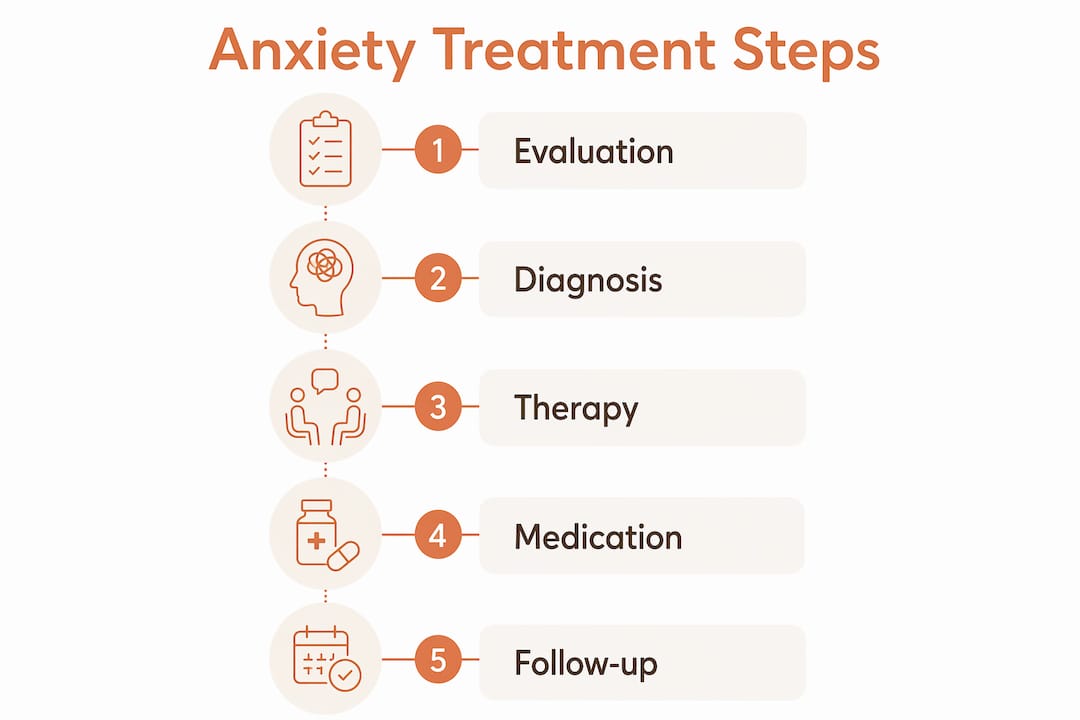
For medication management, the evaluation also includes a review of your medical history, current medications, and any prior psychiatric treatment. From there, your provider develops a personalized care plan. Follow-up visits are scheduled to monitor your response to treatment, adjust medications if needed, and track progress against your goals. Consistent follow-up is what separates effective psychiatric care from a one-time prescription.
How to find and choose an anxiety treatment provider in Colorado
Start with your insurance. Most major plans cover outpatient mental health services, and many Colorado programs verify your benefits before your first appointment. You can also use the Colorado Crisis Services line (1-844-493-8255) as a starting point if you are unsure where to begin.
When evaluating providers, look for:
- Specialization in anxiety disorders, not just general mental health
- Licensed psychiatrists or psychiatric nurse practitioners for medication management
- Therapists trained in CBT, ERP, or other evidence-based protocols
- Telehealth availability if in-person access is a barrier
- Transparent intake and cost processes before you commit
Journeymhw offers online anxiety treatment in Colorado with virtual psychiatric evaluations and medication management, designed for adults who want structured care without the wait. The platform’s intake process is built to get you connected with a provider quickly, which matters when anxiety is already affecting your daily life.
Legal and privacy protections for mental health treatment in Colorado
Colorado law provides strong protections for mental health patients. Your treatment records are protected under both HIPAA and Colorado’s Mental Health Records Act, which limits who can access your information and under what circumstances.
Key protections to know:
- Confidentiality: Your provider cannot share your mental health information without your written consent, with narrow exceptions for imminent safety risks.
- Telehealth privacy: Reputable telehealth platforms use HIPAA-compliant video and messaging systems. Always confirm this before sharing personal health information.
- Informed consent: You have the right to understand your diagnosis, treatment options, and any medications prescribed before agreeing to a care plan.
- Complaint process: If you have concerns about a provider’s conduct, the Colorado Department of Regulatory Agencies (DORA) handles licensing complaints for mental health professionals. The Joint Commission also accepts patient safety concerns for accredited facilities.
Your privacy in treatment is legally protected. Seeking help does not put your personal information at risk.
Ready to start anxiety treatment in Colorado?
Journeymhw makes it straightforward to access structured psychiatric care from home. We offer virtual evaluations, personalized medication management, and anxiety treatment plans built for Colorado adults who are ready to take the next step. No long waits, no commute. Just clear, compassionate care designed around your life.
Key Takeaways
Anxiety disorder treatment in Colorado is accessible, evidence-based, and available virtually for adults across the state, with approximately 95% of patients using insurance to cover care.
| Point | Details |
|---|---|
| CBT is the first-line therapy | Meta-analyses confirm CBT produces significant, durable symptom reduction for most anxiety disorders. |
| ERP delivers measurable results | Programs combining ERP with cognitive behavioral approaches yield about 64% average symptom reduction. |
| Telehealth matches in-person care | Clinical research confirms virtual therapy does not compromise outcomes and improves access statewide. |
| Insurance covers most treatment | Approximately 95% of patients in Colorado anxiety programs use insurance benefits to cover care. |
| Early treatment prevents escalation | Delays in seeking care correlate with symptom worsening, increased depression risk, and reduced quality of life. |
Recommended
- Anxiety Treatment in Texas & Colorado | Online Anxiety Help & Medication – Journey Mental Health
- ADHD Treatment in Colorado – Journey Mental Health
- Anxiety Treatment in Texas & Colorado | Online Anxiety Help & Medication – Journey Mental Health
- Your Colorado Mental Health Anxiety Care Plan Guide – Journey Mental Health