

Affordable Mental Health Care Access: Your Practical Guide
Finding affordable mental health care access in the U.S. feels overwhelming for many adults, especially when cost, insurance gaps, and long wait times stand between you and real support. Whether you are managing anxiety, ADHD, or depression, knowing exactly where to look and what steps to take makes a measurable difference. This guide cuts through the confusion and gives you a clear path, covering national directories, care navigators, sliding-scale clinics, and virtual treatment options so you can get the support you need without letting cost be the final barrier.
Table of Contents
- Key takeaways
- What you need before pursuing affordable mental health care access
- How to find low-cost therapy through national and local resources
- Virtual care options for anxiety, ADHD, and depression
- Common challenges when seeking affordable care
- What to expect from treatment and how to track progress
- My take on finding affordable mental health care
- Start your care with Journeymhw
- FAQ
Key takeaways
| Point | Details |
|---|---|
| Start with crisis support | Use hotlines as an immediate entry point while you arrange longer-term care. |
| Know your insurance options | Medicaid, CHIP, and Marketplace plans may cover more than you expect. |
| Use national directories | SAMHSA and CDC tools connect you to local, low-cost, and sliding-scale providers. |
| Virtual care lowers costs | Telehealth options reduce travel, reduce fees, and expand provider availability significantly. |
| Care navigators save time | Programs like Colorado LIFTS actively remove barriers related to cost, language, and location. |
What you need before pursuing affordable mental health care access
Before you search for a provider, a few minutes of preparation will save you hours of frustration later. Knowing your insurance status and having basic financial information ready will help you determine eligibility for reduced-cost programs faster.
Understanding your coverage options
Medicaid covers mental health services for eligible low-income adults and families, and the Children’s Health Insurance Program (CHIP) extends that coverage to qualifying children. If you do not qualify for Medicaid, Health Insurance Marketplace plans are required by law to include mental health and substance use disorder services as essential health benefits. Still, gaps exist. Many plans carry high deductibles, and not every provider accepts every plan.
Tools to find providers and payment support
Two federal resources deserve a spot in your browser bookmarks right now.
| Resource | What it does |
|---|---|
| SAMHSA Treatment Locator | Searches for mental health providers by ZIP code, including sliding-scale options |
| CDC FindSupport.gov | Links to provider directories, payment assistance, and coping tools |
| Crisis Text Line (text HOME to 741741) | Immediate support via text for urgent mental health situations |
| 988 Suicide and Crisis Lifeline | Call or text 988 for immediate phone-based crisis counseling |
SAMHSA offers multiple treatment locators covering both mental health and substance use, with filtering options specifically for uninsured individuals and those needing payment assistance. The CDC resource page goes a step further, linking to directories and offering guidance for both immediate and longer-term support needs.
Treat crisis hotlines as your front door if you are in urgent distress. Skipping crisis intervention when you need it risks worsening your condition and can extend wait times while you search for a regular appointment.
Pro Tip: Gather your insurance card, income documentation, and a list of your symptoms or medications before your first call or online search. Providers and eligibility workers will ask for all of it, and having it ready shortens the intake process considerably.

How to find low-cost therapy through national and local resources
Getting from “I need help” to “I have an appointment” involves more than one search. Here is a process that works.
-
Start at FindTreatment.gov. Enter your ZIP code and select “mental health” as the service type. Filter by payment options to surface providers that accept Medicaid, sliding-scale fees, or offer reduced rates for uninsured individuals.
-
Contact a care navigator. Care navigators are real people whose job is to connect you with services. They know the local system, eligibility requirements, and how to cut through bureaucracy. In Colorado, Colorado LIFTS and the OwnPath Care Directory provide navigators who help even uninsured or underinsured residents find behavioral health services quickly. Similar programs exist in most states through community health centers.
-
Call your county community mental health center. Federally Qualified Health Centers (FQHCs) and community mental health centers operate on sliding-fee scales tied to your income. If you earn below a certain threshold, your copay could be as low as a few dollars per session. You can locate these through SAMHSA’s locator or by searching “[your county] community mental health center.”
-
Consider a membership-based therapy network. Open Path Psychotherapy Collective offers access to vetted therapists at $40 to $70 per session after a one-time $65 membership fee. This model is designed specifically for people without sufficient insurance coverage, and it covers both in-person and online therapy. For many adults, this is the fastest path to a budget-friendly first appointment.
-
Ask about intake assistance programs. Programs like the Treatment Access Bank in East Tennessee provide up to 15 subsidized therapy sessions and actively guide clients through intake so that financial barriers do not quietly disqualify them before they even begin.
Pro Tip: When you call a community mental health center, ask specifically: “Do you use a sliding-fee scale, and what documentation do I need?” Many centers do not advertise these rates prominently, so you have to ask directly.
Virtual care options for anxiety, ADHD, and depression
Telehealth has genuinely changed the math on mental health treatment. Not just in terms of convenience, though that matters too. Virtual care removes the geographic barrier entirely, meaning you are no longer limited to providers within driving distance. This is especially significant if you live in a rural area or a state where mental health providers are scarce.
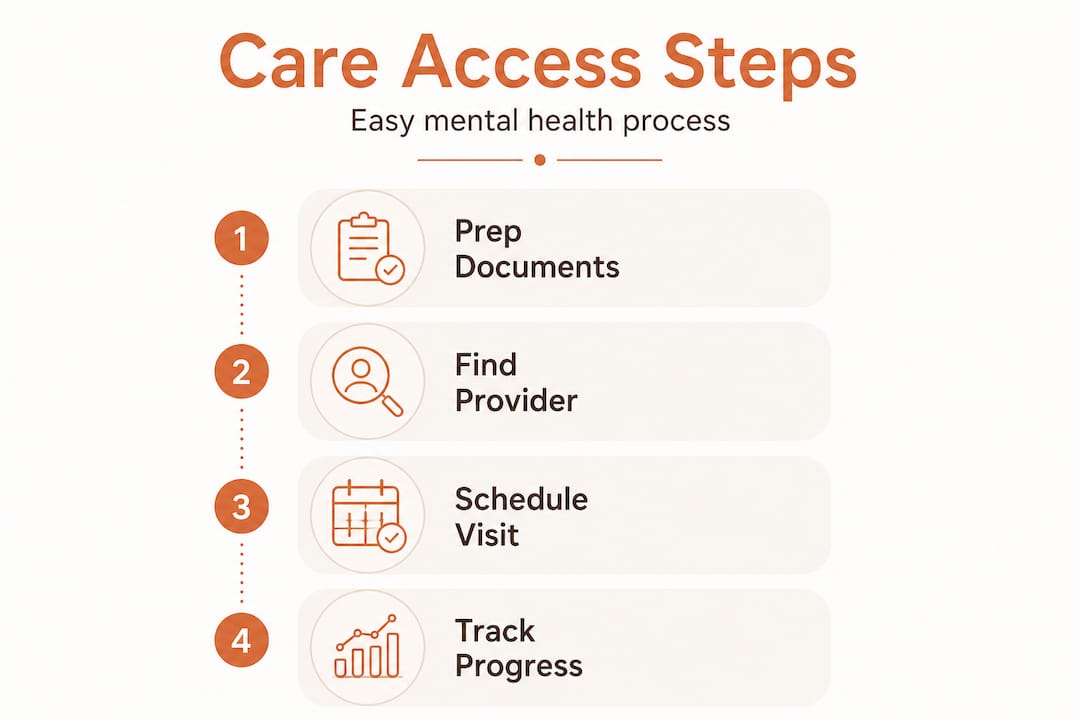
For adults managing anxiety, ADHD, or depression, virtual platforms typically offer three core services: therapy sessions, psychiatric evaluations, and medication management. Each of these can now happen from your home, often at lower out-of-pocket costs than in-person visits because virtual providers carry less overhead.
When evaluating a telehealth provider, consider the following:
- Insurance acceptance. Verify that the platform accepts your insurance before scheduling. Most telehealth platforms list accepted insurers clearly on their websites.
- Licensed providers in your state. Telehealth providers must be licensed in the state where you receive care. Confirm this before booking.
- Medication management availability. If you need a prescription for ADHD, anxiety, or depression, look for platforms offering psychiatric evaluations and ongoing medication management, not just therapy.
- Session costs without insurance. If you are uninsured, ask for the self-pay rate upfront. Many virtual platforms offer rates lower than traditional in-person visits, and some offer their own sliding-scale or membership pricing.
- Structured care plans. Providers that offer defined treatment plans with scheduled follow-ups give you consistency, which is especially important for managing ADHD or recurrent depression.
You can explore virtual mental health benefits in more detail to understand how telehealth specifically supports ADHD, anxiety, and depression management. The shift to virtual care has made low-cost mental health services accessible to more people than any previous model, and it is worth understanding your options before defaulting to what is simply closest.
Pro Tip: Before your first virtual appointment, review a first appointment checklist to prepare your symptom history, medication list, and any questions you want answered. This makes the session more productive and shortens the path to a treatment plan.
Common challenges when seeking affordable care
Even with the right resources, obstacles appear. Knowing what to expect helps you move through them instead of stopping at them.
Wait times are real but manageable. Community mental health centers often have waitlists of several weeks. Use that time productively by establishing care with a crisis hotline, completing an online intake form, or connecting with a care navigator who can flag any faster openings.
Insurance denials do not have to be final. If a claim is denied, request a written explanation and ask your provider to submit a letter of medical necessity. Many denials are overturned on appeal when documentation is specific and timely.
Eligibility confusion stops a lot of people before they start. Many financial assistance programs have strict income thresholds and documentation requirements. People often mistakenly believe no help exists, when in reality the right documentation and a completed intake unlocks access.
Here are four practices that help you move forward when barriers appear:
- Be specific when describing your situation to providers and navigators. Vague descriptions get vague responses.
- Ask every provider whether they have a financial hardship policy, not just a sliding-scale rate. These are sometimes separate programs.
- Keep a log of every call, including the date, the person you spoke with, and what was discussed. This record is useful when appealing denials.
- Know when to escalate to emergency services. If your mental health situation becomes a safety concern, the 988 Lifeline and emergency departments are always available.
“Financial assistance programs with defined eligibility unlock access if clients complete intake properly. The barrier is often paperwork, not the absence of resources.”
What to expect from treatment and how to track progress
Getting into care is only the beginning. Understanding what good care looks like helps you stay engaged and recognize when something needs to change.
For most common conditions, weekly or biweekly sessions are standard at the start of treatment. As you stabilize, frequency often reduces to monthly check-ins. Medication management appointments for ADHD or depression are typically monthly until a stable dose is established, then quarterly.
Signs that your care is working include improved sleep, a greater ability to concentrate on daily tasks, reduced frequency of panic episodes, and a general sense of feeling more functional day to day. These shifts can be subtle at first.
| Care stage | Typical frequency | What to watch for |
|---|---|---|
| Initial treatment | Weekly sessions | Symptom reduction, improved function |
| Stabilization | Biweekly sessions | Consistent progress, fewer crises |
| Maintenance | Monthly check-ins | Long-term stability, medication review |
| Discharge planning | As needed | Independence, self-management skills |
If you are not seeing improvement after four to six weeks, bring it up directly with your provider. Therapy approaches and medication doses are adjusted regularly, and communicating early leads to better outcomes. Providers who offer structured plans, like those available through Journeymhw’s treatment programs, build in follow-up checkpoints specifically to catch these situations early.
My take on finding affordable mental health care
I have spent years helping adults work through the process of finding mental health care on a limited budget, and the pattern I see most often surprises people. It is not that affordable care does not exist. There is actually far more of it than most people realize. The real problem is that people give up after their first search turns up nothing obvious.
What I have learned is that care navigators are underused by almost everyone who could benefit from them. They are not just referral sources. They actively problem-solve. When insurance is confusing, when a waitlist is long, when language is a barrier, a navigator finds a way around it.
I have also seen virtual care change the situation for adults in areas where mental health providers are genuinely scarce. Not just as a convenience, but as the difference between getting care and not getting care at all. Telehealth specifically for anxiety, ADHD, and depression has made affordable psychological services available to people who had no realistic options before.
My honest advice: do not judge the availability of care by one failed search. Use the directories. Call a navigator. Ask directly about sliding-scale rates. The resources are there for people willing to push past the first door.
— Jamie
Start your care with Journeymhw
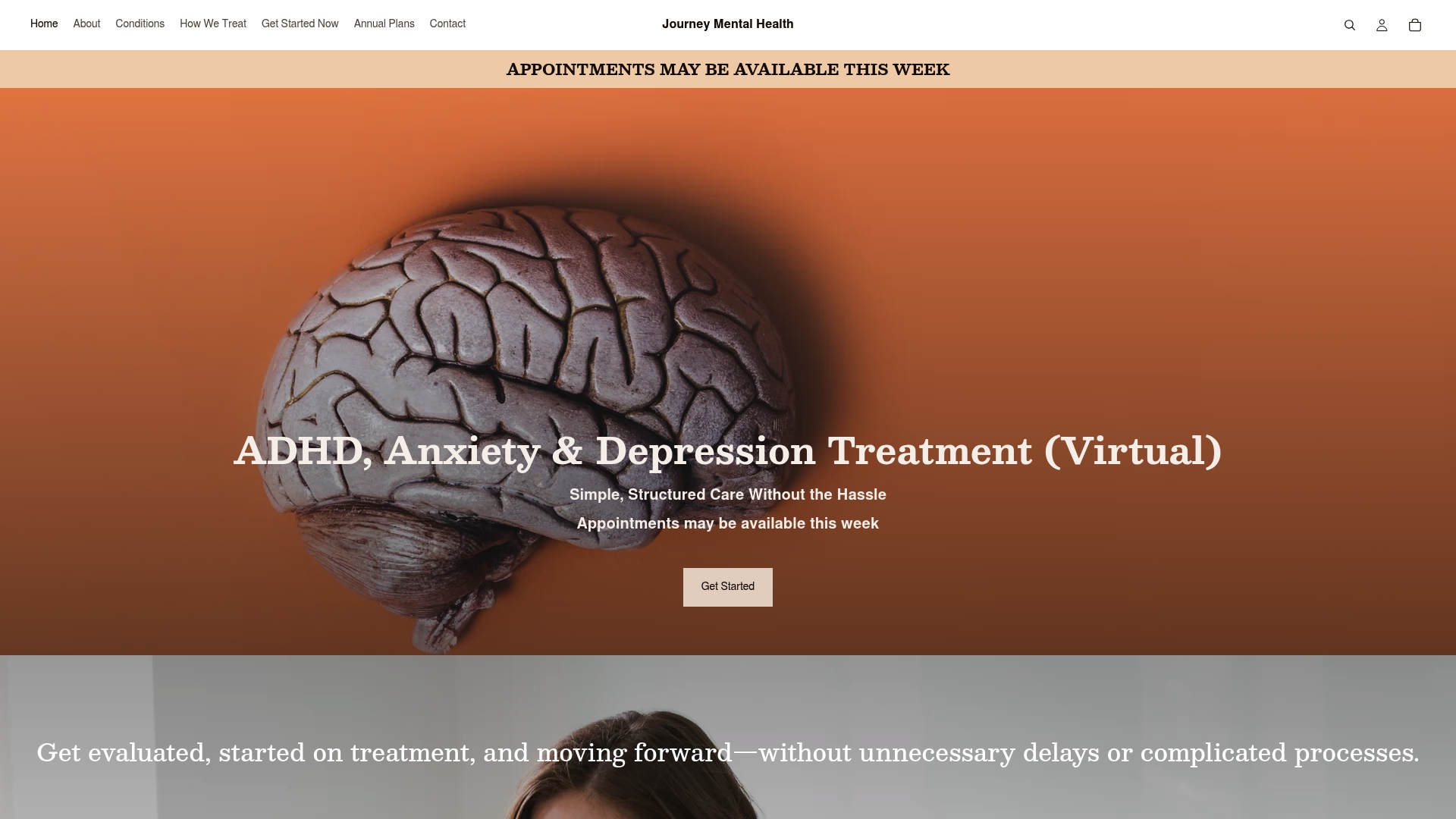
If you are ready to take a concrete next step, Journeymhw makes affordable mental health care access straightforward and structured. Journeymhw is a telehealth platform offering virtual psychiatric evaluations, medication management, and personalized treatment plans for anxiety, ADHD, and depression, primarily serving adults in Texas and Colorado.
The platform’s Simple Plan is designed to reduce the cost and complexity of starting care. You complete an online assessment, receive a structured treatment plan, and connect with a licensed provider without long waitlists or confusing intake processes. For those seeking affordable care in Texas and Colorado, Journeymhw offers a clear entry point that prioritizes your time and budget.
Whether you are managing ADHD in Texas, working through anxiety, or looking for ongoing depression treatment, Journeymhw’s virtual model keeps care accessible and consistent. Start your online assessment today and take the first step toward feeling and functioning better.
FAQ
What is the fastest way to find affordable mental health care?
Start with the SAMHSA treatment locator to find providers by ZIP code, then contact a local care navigator to reduce wait times and identify sliding-scale options. If your need is urgent, the 988 Lifeline connects you immediately with trained counselors.
How much does therapy cost without insurance?
Through networks like Open Path Collective, sessions cost $40 to $70 after a one-time $65 membership fee. Community mental health centers often charge less based on income, sometimes as little as a few dollars per session.
Does telehealth cost less than in-person therapy?
Virtual sessions are often priced lower than in-person visits because providers carry less overhead. Many telehealth platforms also accept insurance and offer self-pay rates, making them a practical option for budget-friendly mental health care.
What is a sliding-scale fee for therapy?
A sliding-scale fee adjusts your session cost based on your income. Community mental health centers and many private therapists offer this model so that lower-income individuals pay less per session while the provider continues to operate.
Can I get mental health care in Texas or Colorado online?
Yes. Platforms like Journeymhw offer virtual psychiatric evaluations and medication management in Texas and Colorado, covering conditions including anxiety, ADHD, and depression with quick appointment availability and structured treatment plans.
Recommended
- Your guide to navigating mental health treatment options – Journey Mental Health
- Starting Mental Health Treatment Online: A Practical Guide – Journey Mental Health
- The Benefits of Virtual Mental Health Care for Depression, Anxiety and ADHD your guide – Journey Mental Health
- Your Mental Health Care Checklist for the First Appointment – Journey Mental Health